Test review DrivOlution BYD Sealion 7 Excellence
Test report
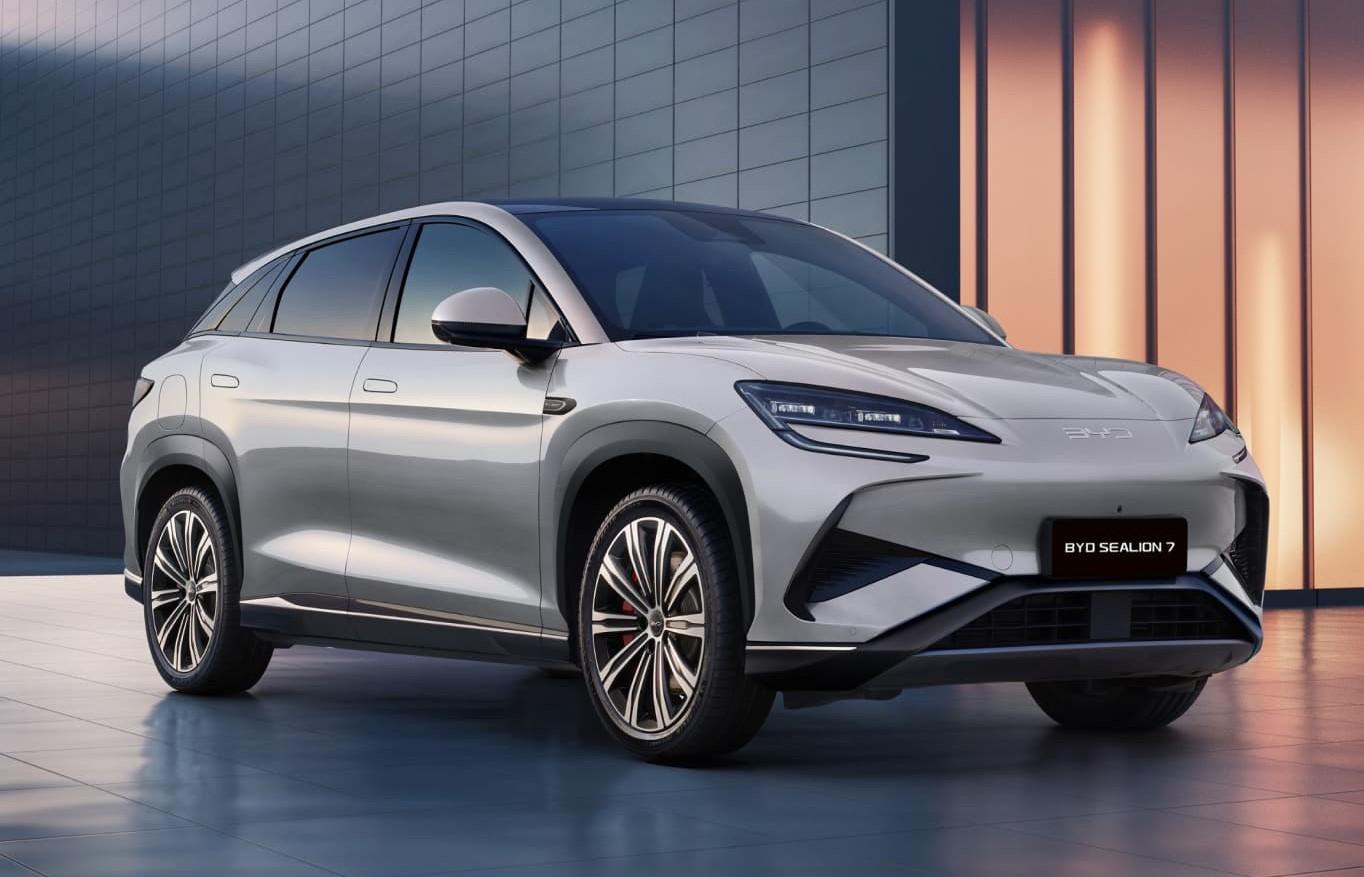
BYD Sealion7 Excellence
BYD is rapidly expanding its European model range. From the compact Dolphin and the popular Atto 3 to the sporty Seal and the spacious Seal U, each model serves a distinct segment within the electric landscape. The new Sealion7 positions itself as BYD's D-SUV, above the Seal U but below the large seven-seater Tang. With its modern design, powerful powertrains and efficient LFP Blade battery on the E-Platform 3.0, the Sealion7 targets drivers who want to combine premium feel, space and realistic efficiency.
The Sealion7 promises a combined electric range of 502 km, and even 616 km in urban areas. These are ambitious figures, which we naturally want to test thoroughly during our test week.
During our test week, we got to know the top version of the Sealion7, the Excellence. This version combines four-wheel drive with the largest battery in the range, aiming to strike a balance between performance, comfort and efficient energy consumption.
The conditions were harsh but realistic: a low outside temperature that justified the permanent use of seat and steering wheel heating. This gave us a clear picture of the actual energy consumption, the actual driving range and the difference with the on-board computer.
General information
- SUV
- Number of seats 5
- Mass in running order 2.010 kg
- LxWxH (mm) 4.830 x 1.925 x 1.620
- Price test vehicle (VATi) 57.480, - euro
- Boot capacity 520 L / 1.789 L (max)
- Load volume frunk (front) 58 L
- Tow bar possible (1,500 kg braked - 750 kg unbraked)
- Warranty: 8 years/250,000 km on the battery
Driveline
- BEV (Battery Electric Vehicle)
- Battery type BYD blade (LFP) (BYD Blade)
- 93 kWh battery capacity (91.3 kWh usable)
- Power 390 kW (530 hp)
- Torque 690 Nm
- AWD
- Architecture 800 V
- EV-platform BYD E-PLATFORM 3.0
- Vehicle-to-load (V2L) yes (3,3 kW AC)
Consumption/driving range (WLTP) (CoC)
- Combined consumption 21,9 kWh/100 km
- Combined driving range 502 km
- Driving range city 616 km
Charging information
- Internal onboard charger 11 kW
- Charging port rear right
- Charge Power AC 11 kW
- Charge Power DC 230 kW max.
- Battery preconditioning possible
- AC: 1 charge(s)
- DC: 0 charge(s)
Test track
- Non-urban (43 km) 18,3 kWh/100 km
- Motorway (39 km) 20,0 kWh/100 km
- City (21 km) 17,0 kWh/100 km
- Combined 18,4 kWh/100 km
Test results
- Non-urban 17,8 kWh/100 km
- Motorway 18,9 kWh/100 km
- City 17,0 kWh/100 km
- Mix 18,5 kWh/100 km
- Combined 18,3 kWh/100 km
Test data
Test drivers
Johan Stevens
415 Testkilometers
Drivetrain
BYD e-Platform 3.0
The BYD Sealion 7 utilises the BYD e-Platform 3.0, a dedicated EV architecture in which the Blade battery (LFP) battery is integrated directly into the chassis, and the efficient 8-in-1 powertrain ensures minimal energy loss and stable performance in all conditions. This platform also forms the technical basis for other recent BYD models, including the Dolphin, Atto 3, Seal and Seal U/Sealion 7, all of which share the same high efficiency, safety and predictable driving experience.
Advantages of BYD e-Platform 3.0
- High safety thanks to integration of the Blade battery (LFP) with Cell-to-Pack/Cell-to-Body technology.
- Efficient 8-in-1 powertrain that reduces energy loss and limits total weight.
- Stable performance in all temperatures thanks to advanced thermal management with heat pump.
- Low centre of gravity and rigid vehicle structure, improving comfort and handling.
- Predictable and consistent energy consumption, ideal for everyday and professional use.
- Faster charging times and improved charging performance, also possible with 800V architecture depending on the model.
- High reliability and low degradation thanks to LFP chemistry and optimal cooling.
? BYD Blade battery (LFP)
The BYD Sealion 7 uses the latest generation of Blade batteries based on LFP chemistry (Lithium-Iron-Phosphate). This battery technology is known for three distinct USPs: exceptional safety, long service life and predictable performance. The distinctive Cell-to-Pack design integrates the elongated "blade" cells directly into the battery pack, increasing structural strength and optimising internal efficiency.
Compared to traditional NMC batteries, LFP offers much higher thermal stability, no use of cobalt or nickel, and virtually no risk of thermal runaway. This makes the Blade battery one of the safest systems on the market, even under extreme load or damage. In addition, an LFP battery can be frequently charged to 100% without significant degradation, ideal for daily use and fleet applications.
Thanks to the combination of safety, durability and low degradation, the Blade battery delivers exceptionally reliable energy output and a predictable consumption profile, perfectly suited to the needs of intensive EV users.
The different versions
Version | Drive | Power | Torque | Battery capacity (usable) | WLTP driving range |
|---|---|---|---|---|---|
Comfort | RWD | ± 230 kW | ± 310 Nm | 82,5 kWh | ± 482 km |
Design AWD | AWD | ± 390 kW | ± 670 Nm | 82,5 kWh | ± 456 km |
Excellence AWD | AWD | ± 530 kW | ± 690 Nm | 91,3 kWh | ± 450 km |
The BYD Sealion 7 is available with two drive configurations:
Comfort features a single electric motor on the rear axle (RWD). This configuration is lighter and more efficient, resulting in the best driving range and predictable, balanced handling.
Design AWD and Excellence AWD utilise two electric motors (front and rear axle). This four-wheel drive provides greater traction, higher torque and faster acceleration, which is particularly noticeable in wet or slippery conditions.
The Excellence AWD combines this with a larger usable battery (91.3 kWh) to maintain driving range.
Diving modes - 4
The BYD Sealion 7 Excellence AWD features four driving modes that adjust drive, throttle response, steering feel and energy management:
Eco – maximum efficiency and driving range; milder throttle response and optimised energy consumption.
Normal – balanced standard mode for everyday use.
Sport – sharper throttle response, more direct drive and maximum performance from the two electric motors.
Snow – optimised AWD torque distribution for extra traction on slippery surfaces (rain/snow).
In summary:
Eco = range · Normal = balance · Sport = performance · Snow = grip.
iTAC system – Intelligent torque adaptation
BYD's Intelligent Torque Adaptation Control (iTAC) system continuously and precisely regulates drive torque. Based on grip, steering angle, accelerator pedal input and the current driving situation, the system dynamically distributes power to the wheels. When accelerating, cornering or on slippery road surfaces, torque is automatically transferred to the wheels with the most traction, ensuring greater stability and confidence.
Thanks to the direct response of electric motors, iTAC can intervene faster and more accurately than conventional mechanical AWD or ESP systems. The result is not only greater safety and control, but also smoother acceleration and higher efficiency, as four-wheel drive is only used when really needed.
Brake energy recovery
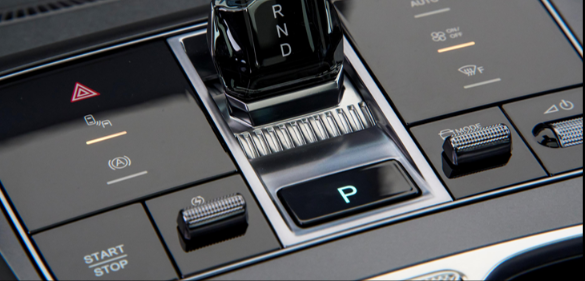
In the BYD Sealion 7 (Excellence AWD), brake energy recovery is controlled via a physical button on the centre console.
Operation: button on the centre console
Levels: Standard ↔ Elevated
Direct effect: change in the delay when releasing the accelerator pedal
Practice:
Standard → smooth rolling, comfortable on motorways
Elevated → increased energy recovery, ideal for city driving
Although the Sealion 7 does not offer full one-pedal driving, the physical button allows you to adjust the recuperation level quickly and intuitively while driving — a clear ergonomic advantage.
Consumption
We covered a total of 415 test kilometres with the BYD Sealion7, spread over 11 registered journeys — slightly less than hoped for, but sufficient to form a representative picture. Based on the on-board computer, we recorded an average consumption of 18.3 kWh/100 kilometres at an average outside temperature of 7°C. With a usable battery capacity of 82.5 kWh, this translates into a realistic range of approximately 451 km on a single charge.
? Analysis of consumption by road type
We hebben in totaal 415 testkilometers afgelegd met de BYD Sealion7, verdeeld over 11 geregistreerde ritten — iets minder dan gehoopt, maar wel voldoende om een representatief beeld te vormen. Op basis van de boordcomputer noteren we een gemiddeld verbruik van 18,3 kWh/100 km bij een gemiddelde buitentemperatuur van 7°C. Met een bruikbare batterijcapaciteit van 82,5 kWh vertaalt zich dat in een realistische actieradius van ongeveer 451 km op één laadbeurt.
? Analysis of consumption by road type
Road type | Number of trips (#) | Share(%) | Consumption (kWh/100 km) |
|---|---|---|---|
Non-urban | 4 | 36,4 % | 17,8 |
Motorway | 5 | 45,5 % | 18,9 |
City | 1 | 9,1 % | 17,0 |
Mix | 1 | 9,1 % | 18,5 |
Total | 11 | 100 % | — |
Almost 46 % of the journeys took place on the motorway, making the test result realistic and demanding.
Rural roads account for more than ⅓ of usage, typically for daily professional traffic.
City and mix have a limited share and do not enhance the overall result.
? Analysis of consumption per driving mode
Driving mode | Number of trips (#) | Share (%) | Consumption(kWh/100 km) |
|---|---|---|---|
Eco | 8 | 72,7 % | 18,4 |
Normal | 2 | 18,2 % | 18,3 |
Sport | 1 | 9,1 % | 17,7 |
Total | 11 | 100 % | — |
Despite the dominant use of Eco mode (72.7% of journeys), the difference in consumption between the various driving modes remains limited. It is striking that Sport mode actually records the lowest average at 17.7 kWh/100 km, which points to an efficient powertrain and limited losses with a more direct throttle response. The limited spread confirms that, in practice, energy consumption is more strongly influenced by driving conditions than by the selected driving mode.
?Consumption & theoretical driving range per road type
Road type | Number of trips (#) | Consumption (kWh/100 km) | Theoretical driving range (km) |
|---|---|---|---|
Buiten stad | 4 | 17,8 | 513 km |
Autosnelweg | 5 | 18,9 | 483 km |
Stad | 1 | 17,0 | 537 km |
Mix | 1 | 18,5 | 494 km |
?Consumption & theoretical driving range per driving mode
Driving Mode | Number of trips (#) | Consumption (kWh/100 km) | Theoretical driving range (km) |
|---|---|---|---|
Eco | 8 | 18,4 | 496 km |
Normal | 2 | 18,3 | 499 km |
Sport | 1 | 17,7 | 516 km |
Test track
In keeping with tradition, we subjected the BYD Sealion7 Excellence to our standard DrivOlution test route. During this test week, we covered 102.7 kilometres (rounded up to 103 kilometres). The on-board computer recorded a combined consumption of 18.4 kWh/100 km, good for a theoretical driving range of 496 km based on the usable battery capacity of 91.3 kWh.
When we calculate consumption based on the actual energy consumed (kWh) and the distance travelled, we arrive at a slightly higher value. The actual measured consumption is 19.1 kWh/100 km, which equates to a theoretical driving range of 477 km – approximately 19 km less than the on-board computer indicates.
During these test drives, we recorded an average outside temperature of 6°C and consistently drove in Eco mode. In addition, we made continuous use of the seat heating and steering wheel heating, which logically increases energy consumption slightly. This partly explains why the actual consumption is slightly higher than the on-board computer consumption.
Below you will find a detailed overview per road type.
?Evolution of driving range
Road type | Trip length (km) | Consumption (kWh/100 km) | Driving range start (km) | Driving range end (km) | Δ Driving range (km) |
|---|---|---|---|---|---|
Non-urban | 43,0 | 18,3 | 333 | 292 | –41 |
Motorway | 39 | 20,0 | 292 | 244 | –48 |
City | 21,0 | 17,0 | 244 | 230 | –14 |
?SoC evolution
Road type | Trip length (km) | Consumption (kWh/100 km) | SoC start (%) | SoC end (%) | Δ SoC (%) | SoC consumption per kilometre (%/km) |
|---|---|---|---|---|---|---|
Buiten stad | 43,0 | 18,3 | 70 | 61 | –9 | 0,21 |
Autosnelweg | 39 | 20,0 | 61 | 51 | –10 | 0,26 |
Stad | 21,0 | 17,0 | 51 | 47 | –4 | 0,19 |
?Comparison of actual consumption vs. on-board computer
Based on the recorded trip data, we see that the actual energy consumption, calculated using the effective kWh drawn from the battery, is slightly higher than the values indicated by the on-board computer for all road types. Outside built-up areas, we arrive at 19.0 kWh/100 km, compared to 18.3 kWh/100 km according to the on-board computer. On the motorway, we measure 20.8 kWh/100 km20.0 kWh/100 km, and in the city, the actual consumption was 17.4 kWh/100 km, compared to 17.0 kWh/100 km.
Road type | Actual consumption (kWh/100 km) | On-board computer (kWh/100 km) | Difference |
|---|---|---|---|
Non-urban | 19,0 | 18,3 | +0,7 |
Motorway | 20,8 | 20,0 | +0,8 |
City | 17,4 | 17,0 | +0,4 |
?Comparison of driving range (on-board computer vs actual)
Roadtype | BC consumption (kWh/100 km) | BC driving range (km) | Actual consumption (kWh/100 km) | Actual driving range (km) | Difference (actual – BC) |
|---|---|---|---|---|---|
Non-urban | 18,3 | 499 km | 19,0 | 481 km | –18 km |
Motorway | 20,0 | 456 km | 20,8 | 440 km | –16 km |
City | 17,0 | 537 km | 17,4 | 525 km | –12 km |
Based on the usable battery capacity (91.3 kWh) , we compare the theoretical driving range calculated using the on-board computer consumption with the driving range based on the actual energy consumption. On all road types, the actual driving range is slightly lower than what the on-board computer suggests.
Outside the city, the theoretical driving range drops from 499 km (BC) to 481 km (actual), a difference of –18 km.
On the motorway, the deviation is –16 km (456 km → 440 km).
The difference is smallest in city traffic, at –12 km (537 km → 525 km).
These differences are minor, but once again demonstrate that the on-board computer uses slightly optimistic consumption values. The low outside temperature during the test week (average 6°C) partly explains why the actual driving range is slightly lower than the theoretical values calculated by the on-board computer.
*The specified driving range is a theoretical calculation based on the usable battery capacity. This is always a snapshot. All kinds of factors such as weather conditions, use of climate control, topography, traffic congestion and your own driving style can influence this.
We strive to drive as efficiently as possible by making maximum use of cruise control (constant speed) and by anticipating traffic situations as much as possible. The speed on motorways is 110 km/h. Energy consumers (such as air conditioning) are switched off if weather conditions permit. In addition, we select the most efficient driving mode (Eco), if available.
Charging and driving range
General
The BYD Sealion7 comes standard with an 11 kW three-phase AC charger, suitable for home and public charging points. For fast charging, the model supports DC charging up to approximately 140 kW, allowing for efficient planning of charging stops along the way.
Charging time and impact on driving range
During the test, one AC charging session was recorded, which provides additional insight into the practical recoverable driving range of the BYD Sealion7. The charging session started at a State of Charge of 32%, corresponding to a displayed driving range of 157 km, and continued to 100% SoC, with a driving range of 498 km.
This means that during this charging session, 68% battery capacity was recharged, representing a simulated driving range of 341 km. Converted, this amounts to an average of approximately 5 km driving range per per cent SoC, which is in line with the previously established practical consumption figures of between 17 and 20 kWh/100 km.
As with the driving range calculations based on trip consumption, this is also a simulation based on on-board computer data and current consumption values. The effective driving range regained after charging may vary in practice depending on driving style, road type, temperature, use of comfort features and the conditions in which subsequent journeys take place.
However, this charging session does confirm the predictability of the Sealion7: when charging from approximately 30% to 100%, you can expect a usable range of more than 300 km under normal conditions, which makes the car particularly suitable for daily use and planning without charging stress. a5>.
⚡Overview of charging sessions
Charging session | Type of charging session | Driving range start (km) | Driving range end (km) | SoC start (%) | SoC end (%) | Added driving range (km) | Added SoC (%) |
|---|---|---|---|---|---|---|---|
Session 1 | AC | 157 | 498 | 32 | 100 | 341 | 68 |
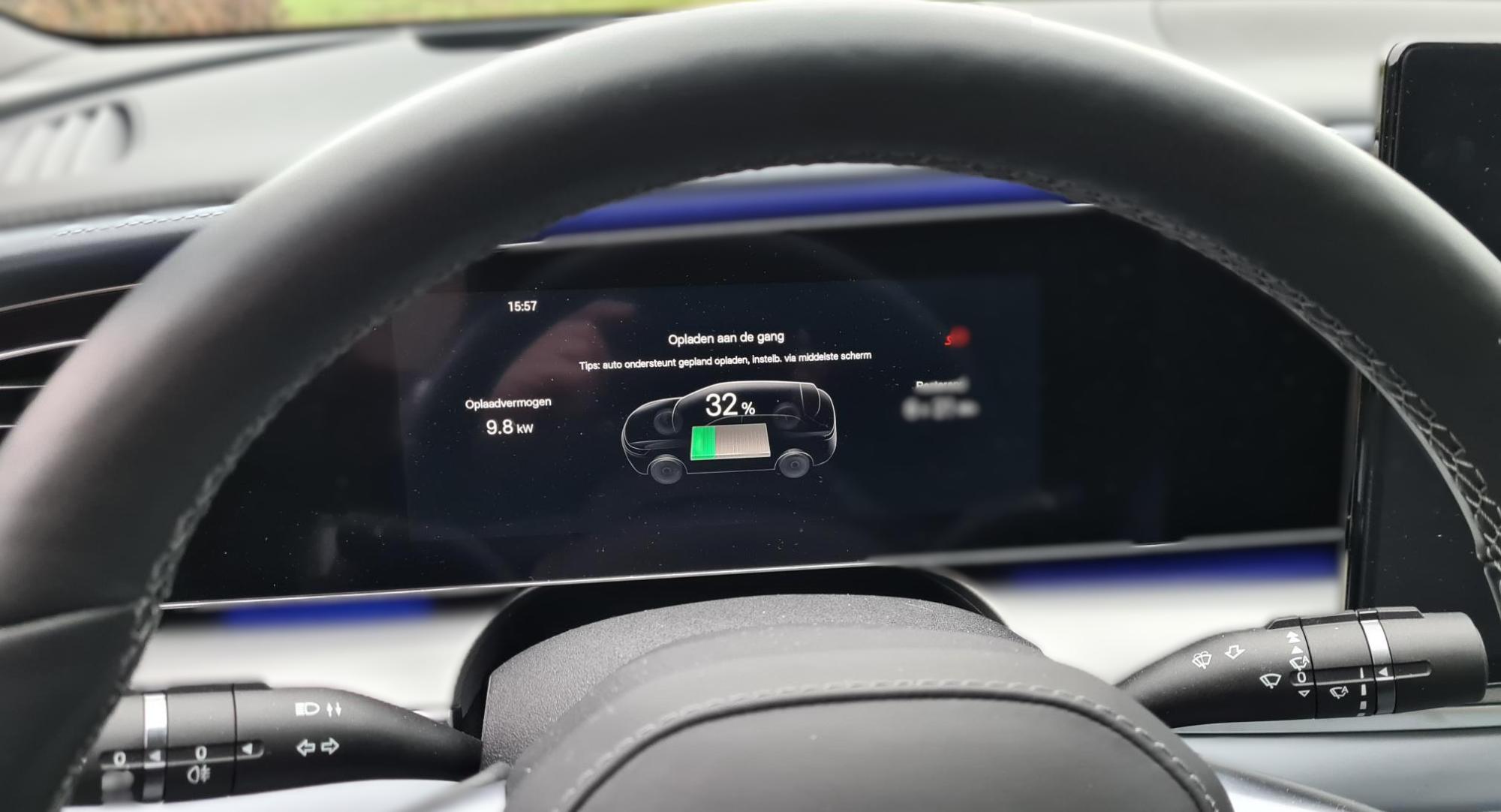
During the charging process, the current charging power (kW) is displayed, together with the current State of Charge (SoC in %) and the estimated remaining charging time (hh:mm) until the set charge level is reached.
Drive and comfort
The BYD Sealion 7 Excellence combines space, technology and driving comfort in a particularly balanced way. With a boot capacity of 520 litres, expandable to 1,789 litres with the rear seats folded down, and a practical 58-litre frunk at the front, it offers plenty of flexibility for both everyday use and larger transport needs.
At the heart of the interior is the 15.6-inch swivelling touchscreen, which can be used both horizontally and vertically and serves as the hub for infotainment, navigation and vehicle settings. For the driver, there is also a 10.25-inch digital instrument cluster, which clearly and concisely displays essential driving information such as speed, driving mode, ADAS status and energy consumption.
When driving, the Sealion 7 stands out for its smooth and comfortable handling. The quiet electric drive, stable road holding and refined suspension ensure a relaxed driving experience, both in the city and on long journeys.
An additional advantage is the presence of physical buttons for functions such as window control, which improves ergonomics and user-friendliness. The Sealion 7 Excellence thus successfully bridges the gap between digital innovation and intuitive, practical operation.
Driver assistance systems (ADAS)
We can state that the BYD Sealion 7 Excellence has all driver assistance systems required by the European GSR (General Safety Regulation).
This means that the Sealion 7 comes standard with essential active safety systems such as automatic emergency braking, lane assist, intelligent speed assist, driver monitoring and rear parking sensors. Combined with BYD's comprehensive ADAS package and 360° camera system, the Sealion 7 Excellence not only meets legal safety requirements, but also offers a high level of comfort and peace of mind in everyday traffic.
The BYD Sealion 7 is equipped with a comprehensive package of driver assistance systems, including:
Adaptive Cruise Control (ACC) – automatically adjusts speed to traffic conditions
Lane Keep Assist (LKA) – actively keeps the vehicle within the lane
Blind Spot Detection (BSD) – alerts you to vehicles in your blind spot
Automatic Emergency Braking (AEB) – intervenes in the event of an imminent collision
Front & Rear Cross Traffic Alert – detects crossing traffic during manoeuvres
Traffic Sign Recognition (TSR) – recognises and displays traffic signs
Driver Attention Warning – detects fatigue or reduced attention
360° panoramic camera – full all-round visibility when parking and driving at low speeds
Together, these systems provide greater safety, comfort and confidence, both in city traffic and on longer journeys.
Some driver assistance systems can be somewhat sensitive in practice, especially in complex traffic situations such as narrow lanes, roadworks or busy city traffic.
In the BYD Sealion 7 Excellence, this sometimes manifests itself in rapid warnings or slight steering and braking interventions, while the situation still feels perfectly controllable to the driver. This is not a fault, but the result of conservative safety settings, which deliberately warn earlier rather than intervene too late.
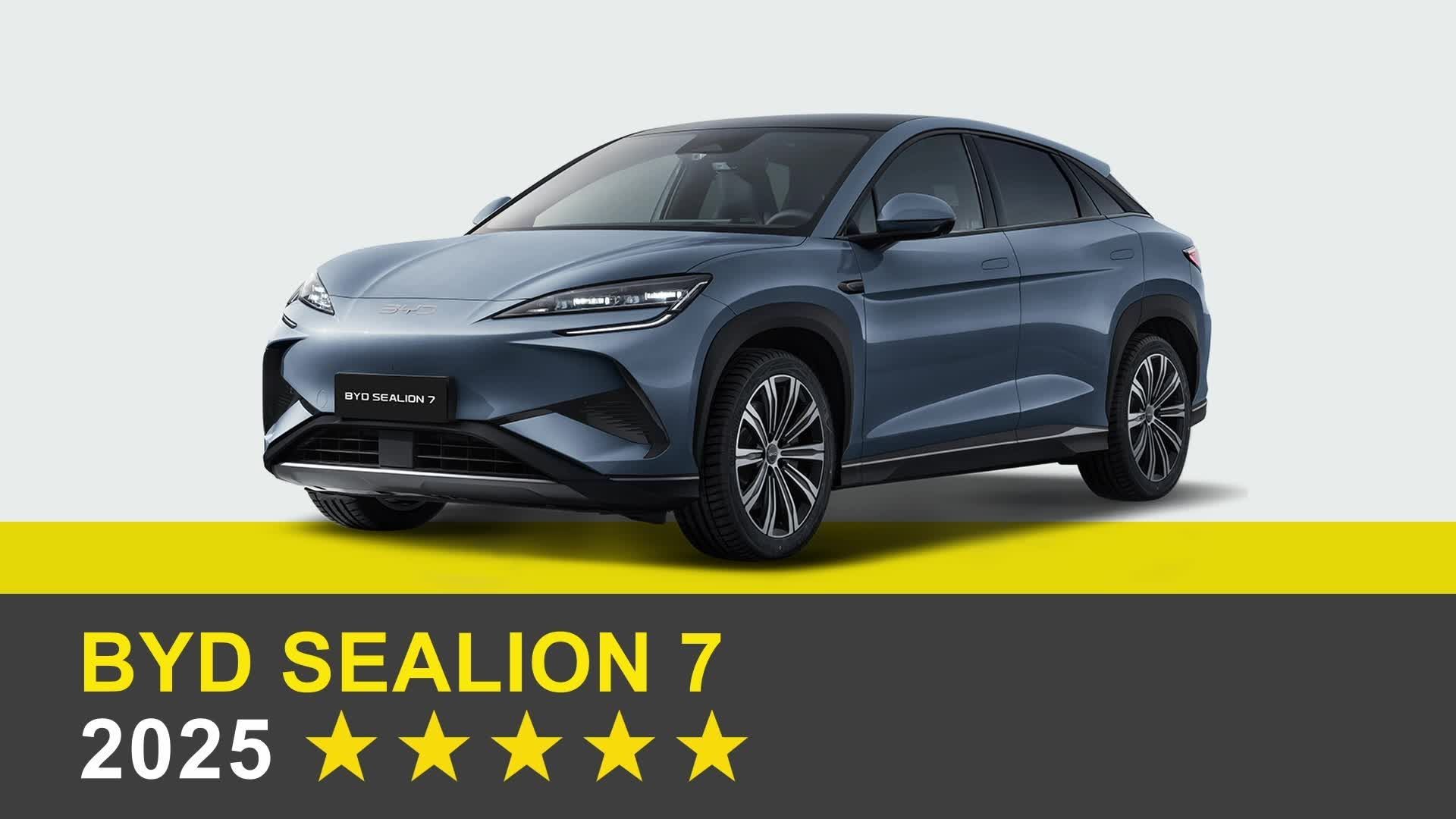
The BYD Sealion 7 was designed with safety as a priority and was assessed according to the strict standards of Euro NCAP. Thanks to a rigid body structure, comprehensive ADAS systems and active safety features, the Sealion 7 offers a high level of protection for occupants and vulnerable road users. This underlines its position as a safe and reliable electric D-SUV for everyday use and long journeys.
Driving range simulation (km) based on trip consumption (kWh/100 km), road type, trip length (km) and usable battery capacity (kWh)
Simulation based on actual consumption
Over 11 journeys and 415 kilometres, these figures confirm a highly stable efficiency profile. Journey consumption remains limited to between 17.0 and 20.0 kWh/100 km, with only limited variation despite differences in road type, journey length and driving mode.
City and extra-urban deliver the best efficiency, with theoretical driving ranges of up to 537 kilometres.
Motorway journeys logically show higher consumption, but remain consistent at around 480–510 kilometres driving range.
It is striking that even Sport mode (Journey 7) has no significant negative impact on fuel consumption. However, this was a short journey of only 9 km, so not really relevant.
These figures underline that, in real-world conditions, the Sealion7 can offer a predictable and realistic driving range of approximately 480–520 km. As always, this is a simulation based on actual driving consumption; factors such as temperature, driving style, traffic congestion and comfort consumers remain decisive in practice.
Comparison WLTP/test results Drivolution
Compared to the WLTP homologation, the BYD Sealion7 scores significantly lower energy consumption in the DrivOlution test: 18.3 kWh/100 km compared to 21.9 kWh/100 km according to CoC (−16%). The calculated driving range of 451 km is lower than the WLTP value of 502 km, which is explained by the use of net battery capacity and winter test conditions. The results confirm an efficient powertrain and a realistic, predictable driving range in everyday use.
Parameter | WLTP (CoC) | DrivOlution |
|---|---|---|
Combined consumption | 21,9 kWh/100 km | 18,3 kWh/100 km |
Combined driving range | 502 km | 451 km |
City driving range | 616 km | — |
Usable battery | — | 82,5 kWh netto |
Temperature | ~23 °C (norm test) | 6–7 °C |